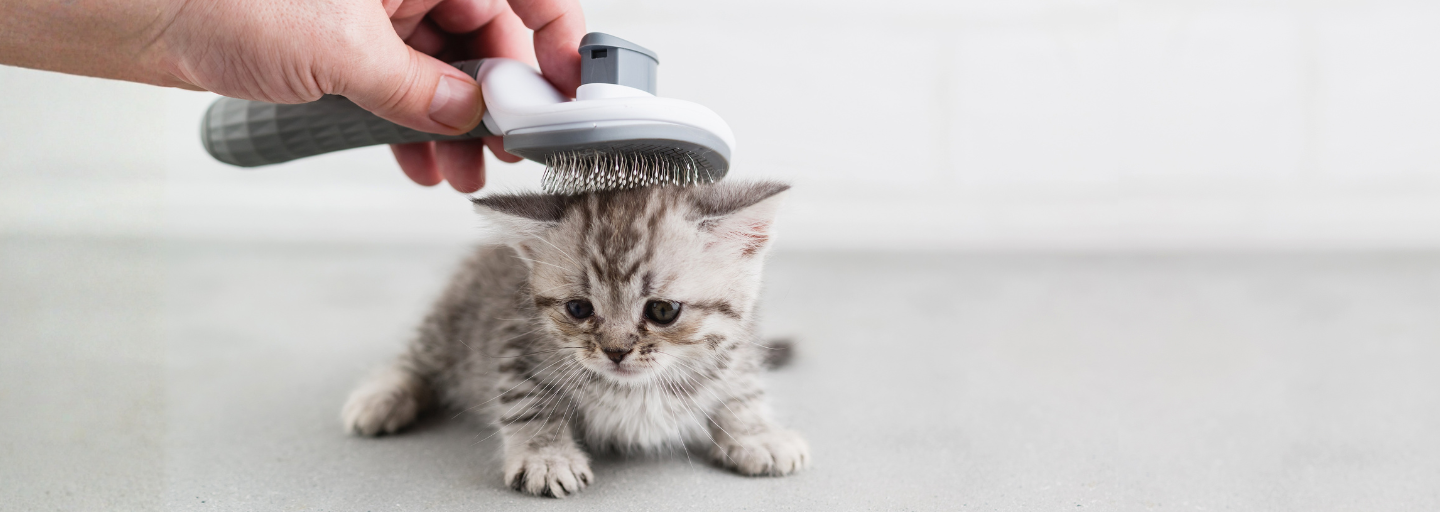
Grooming your kitten is a vital part of their overall health and well-being—and it’s also a wonderful way to strengthen your bond. Starting early and making grooming a positive experience helps your kitten grow into a confident, well-cared-for adult cat.
Why Grooming Matters for Kittens
Kittens are naturally curious, playful, and full of energy. Regular grooming offers more than just a tidy coat—it supports their physical health and emotional comfort.
• Stimulates Circulation: Gentle brushing boosts blood flow and supports healthy skin.
• Reduces Hairballs: Removing loose fur helps prevent hairballs, especially as your kitten begins self-grooming.
• Promotes a Healthy Coat: Grooming smooths down fur, improves insulation, and distributes natural oils for shine and protection.
• Early Health Checks: Grooming sessions let you spot fleas, ticks, or skin issues early.
Grooming and Temperature Regulation
Even at a young age, kittens instinctively groom themselves to stay cool. By spreading saliva on their fur, they create a cooling effect as it evaporates. Grooming also helps distribute sebum, a natural oil that waterproofs and protects their skin.
While kittens are learning to groom themselves, your involvement ensures they stay clean, healthy, and comfortable -especially during warmer months.
Start Early and Build a Routine
The earlier you begin grooming your kitten, the easier it becomes. Early exposure helps them feel safe and relaxed during grooming sessions.
• Introduce Gradually: Start with short sessions and gentle strokes.
• Use Positive Reinforcement: Offer treats and praise to build trust.
• Stay Consistent: Regular grooming helps your kitten see it as a normal part of life.
How to Groom Your Kitten
Grooming techniques vary depending on your kitten’s coat type. Here’s how to care for both shorthaired and longhaired kittens:
Shorthaired Kittens
• Use a fine-toothed metal comb weekly to remove dead hairs.
• Brush gently with a natural-bristle or rubber brush in the direction of hair growth.
• For a polished look, sweep the coat upward with the brush, then smooth it down.
Longhaired Kittens
• Groom daily with a steel comb to prevent tangles and mats.
• Work in sections, combing from roots to tips.
• If you find knots, gently tease them out with your fingers or use blunt-ended scissors—but if you're unsure, ask your vet for help to avoid injury.
Making Grooming Easier
Some kittens may be hesitant at first, but with patience and encouragement, grooming can become a favorite ritual.
• Use Treats as Distraction: Begin grooming while your kitten enjoys a treat.
• Speak Softly and Stroke Gently: Reassure your kitten with calm words and gentle touch.
• Extend Sessions Gradually: As your kitten becomes more comfortable, slowly increase grooming time.
Grooming your kitten isn’t just about keeping them clean - it’s a chance to build trust, monitor their health, and enjoy quality time together. With a gentle approach and a little patience, you’ll help your kitten feel safe, loved, and ready to shine.