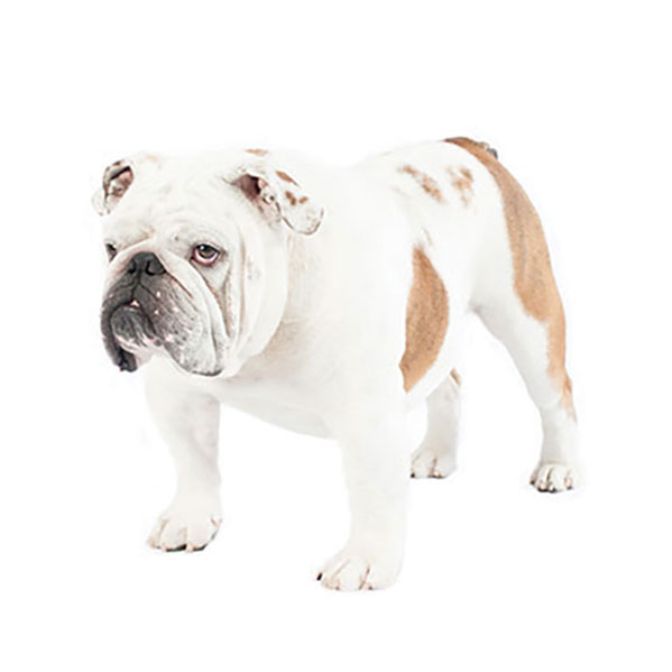
Bulldog
Medium
Short
Bulldog stands at between 31- 36 cm at the withers.
Low
23 to 25 kg
Conformation, Obedience, Rally Obedience
Bulldogs are known for their calm and friendly temperament. They are affectionate, loyal, and generally good with children, making them excellent family companions. While they can be somewhat stubborn and independent, their gentle nature allows them to coexist well with other pets. Early socialization and consistent training are important to ensure they develop good manners.
Bulldogs have a unique appearance characterized by their loose, wrinkled skin and broad, muscular build. They typically weigh between 40 to 50 pounds and stand about 14 to 15 inches tall at the shoulder. Their short, stocky legs and wide stance give them a powerful presence. Bulldogs have a short coat that is smooth and comes in various colors, including brindle, fawn, and white.
The average lifespan of a Bulldog ranges from 8 to 10 years. Unfortunately, they are prone to certain health issues, including respiratory problems and joint issues, which can impact their longevity. Regular veterinary care and a healthy lifestyle can help extend their lifespan.
Bulldogs come in a variety of colors, with brindle, fawn, and white being the most common. Some may have a combination of these colors, often with distinctive markings. Their unique coloration adds to their charm and appeal among dog enthusiasts.
Bulldogs are moderate shedders, and their short coat requires minimal grooming. Regular brushing helps manage shedding and keeps their coat healthy. Bathing should be done as needed to maintain cleanliness, especially given their skin folds, which can trap dirt and moisture.
Bulldogs are generally healthy dogs, but they can be prone to specific health issues, including brachycephalic airway syndrome, hip dysplasia, and skin infections. Regular veterinary visits and a proper diet are essential for maintaining their health and well-being.
A balanced diet is crucial for the health of a Bulldog. High-quality dog food that meets their nutritional needs should be provided, taking into account their size and activity level. Portion control is important to prevent obesity, which is a common concern in this breed.
The Bulldog's history dates back to the 13th century in England, where they were bred for bull-baiting. As bull-baiting was banned in the 19th century, the breed was refined for companionship. Over the years, Bulldogs have become known for their gentle and friendly nature, transitioning from working dogs to beloved family pets.
- Bulldogs are known for their distinctive pushed-in nose and loose skin, giving them a unique appearance.
- They are generally low-energy dogs, making them suitable for apartment living.
- Bulldog puppies are particularly adorable, with their wrinkled faces and playful antics.



 RightPaw