The Great Dane is a giant dog breed known for its impressive stature and gentle nature. Originating from Germany, this breed was initially developed for hunting large game, such as boar and deer. Over time, Great Danes have become beloved family pets, known for their loyalty and affectionate demeanor.
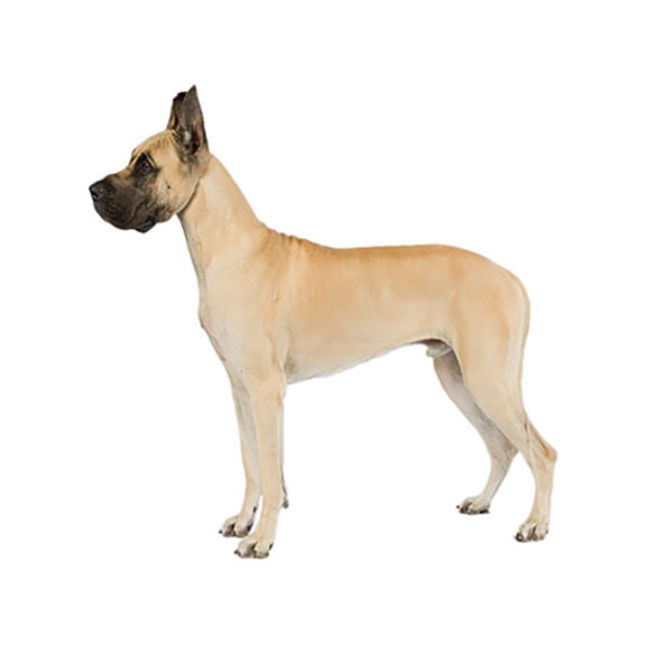
Great Dane
Size
Giant
Height
Over 18 months of age the minimum height of males should ideally be 76cm at the withers. Females, of the same age should have a minimum height of 71cm at the withers.
Weight
Over 18 months of age males weigh 54kg. Females, weigh 46kg.
Coat
Short
Energy
Medium
Colors
Great Danes come in a variety of colors, including fawn, brindle, blue, black, and harlequin (white with irregular black patches). Their unique color patterns contribute to their striking appearance.
Activities
Agility, Obedience, Rally Obedience
Shedding
Moderate
Colors
Fawn, Brindle, Blue, Black, and Harlequin
Personality

Personality
Great Danes are known for their friendly and gentle temperament. Despite their large size, they are often referred to as "gentle giants." They are affectionate with their families and can be good with children and other pets. Early socialization and training are essential to ensure they develop into well-mannered companions.
History and Origins
History and Origins
The Great Dane's history dates back to ancient times, with ancestors believed to include the Molosser and Greyhound breeds. They were used as hunting dogs and later as guardians and companions. Their noble appearance has made them popular in various cultures throughout history.
Nutrition and Feeding
Nutrition and Feeding
A nutritious diet is vital for the health of a Great Dane. High-quality dog food that meets their specific nutritional needs is recommended. Portion sizes should be adjusted based on their age, size, and activity level to maintain a healthy weight.
Other Information
Other Information
Great Danes are known for their impressive size, often making them the tallest dog breed in the world. Despite their size, they are known for their affectionate nature and often think of themselves as lap dogs.
Health: Great Danes can be prone to certain health issues, such as hip dysplasia, bloat (gastric torsion), and heart conditions. Regular health screenings and responsible breeding practices are crucial to minimize these risks.
Characteristics: This breed is characterized by its tall and muscular build, with males typically standing between 76 to 86 cm and females between 71 to 81 cm at the shoulder. Great Danes can weigh between 45 to 90 kg. They have a short coat that comes in various colors, including fawn, brindle, blue, black, and harlequin.
Lifespan: The average lifespan of a Great Dane is around 7 to 10 years. Due to their size, they are prone to certain health issues that can affect their longevity, making regular veterinary care essential.